October 21, 2026
Maverick X: Building a Modern Brain for a 1970 Ford Maverick
A 1970 Ford Maverick, three generations of family history, and a network engineer who decided a classic car needed its own digital nervous system.…
Read the article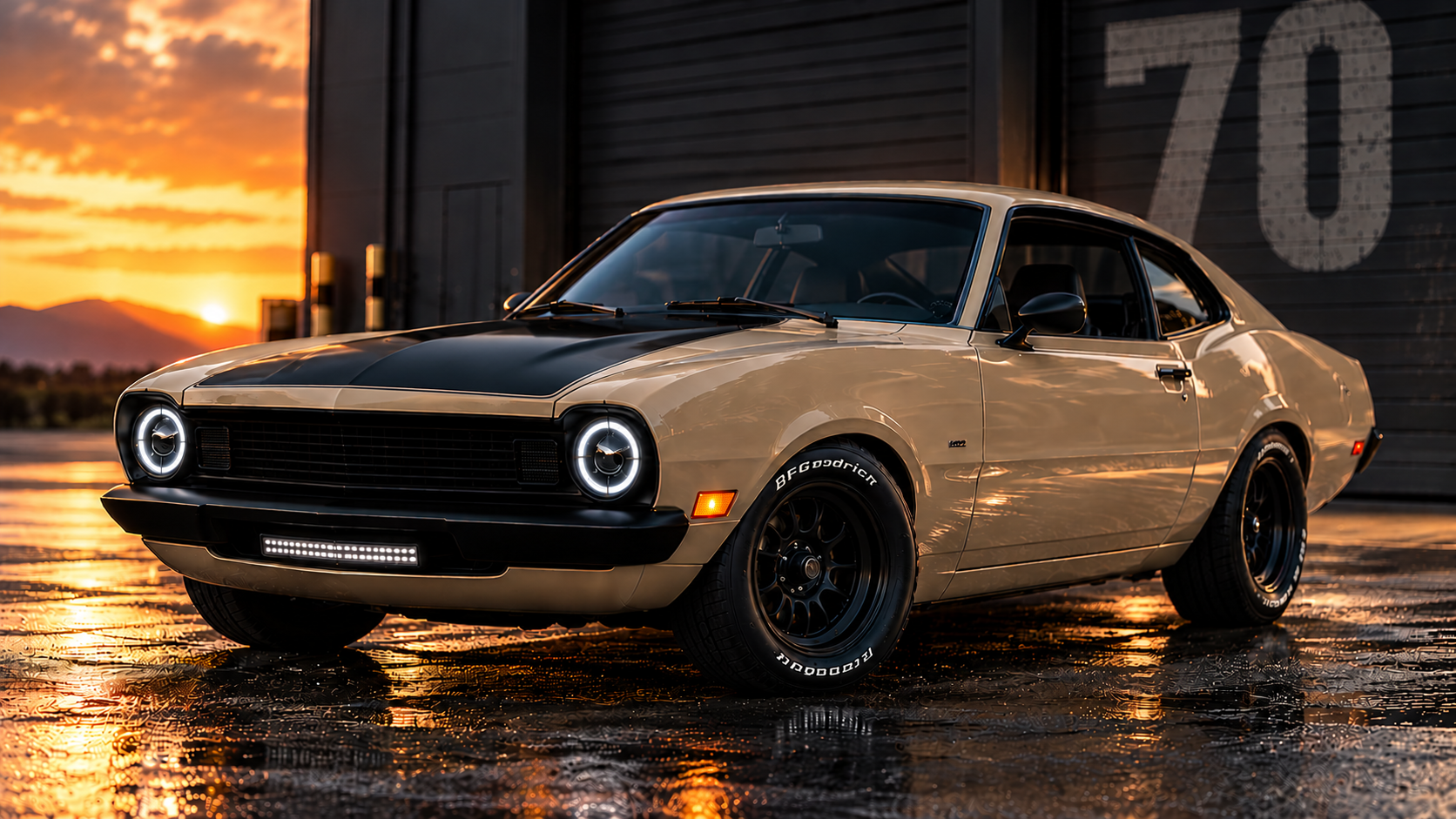
1970 Ford Maverick / An ongoing build
Built Free. Built Different.
Built to Break the Rules.
Steel. Sparks. Software.
A 1970 Ford Maverick. Twenty years of history. Three generations. And one engineer who can't leave well enough alone.
Some people see a 1970 Ford Maverick and see an old car.
I see twenty years of memories, a whole lot of mechanical engineering, and an opportunity to prove something I've believed for a long time:
Old isn't always bad. New isn't always better. And sometimes the best solution is finding a way for both to work together.
Welcome to Maverick X.
This isn't a traditional restoration. It isn't a modern engine swap with a classic body wrapped around it. And it certainly isn't an attempt to turn a 1970 Maverick into something it was never meant to be.
It's an experiment in engineering, creativity, and figuring things out as I go.
I'm taking a classic American car, preserving the mechanical principles that make it special, and layering modern technology around it to improve comfort, visibility, performance monitoring, and the overall driving experience.
And because I'm a network engineer, naturally, I decided the car needed its own network.
But we'll get to that.
01 The beginning
The summer I was 17, my aunt gave me something I'll never forget.
A 1970 Ford Maverick.
She'd gotten the car from a gentleman in the military out in California, someone she knew through church. And in an incredibly generous gesture, she gave it to me as what was essentially a graduation present.
I've always loved classic cars, so getting one at 17 was pretty incredible.
And this wasn't some rusted-out project car.
It was a 100% original Maverick with just 67,000 miles on it. For a car of its age, it was about as good as it gets.
For roughly the next ten years, I drove that car every day.
It wasn't a weekend toy or something I kept tucked away in a garage. It was my daily driver.
Around 2014, we gave the engine some attention. We overhauled it, installed an RV camshaft, and had the cylinder head and valves worked on.
Nothing outrageous. Just good, old-fashioned mechanical improvements.
Then life happened.
About ten years ago, my son was born.
And as it turns out, modern child safety seats and 1970 Ford Mavericks don't exactly go together.
So the Maverick got parked.
Not intentionally. There wasn't some grand plan to put it away for a decade.
It just happened.
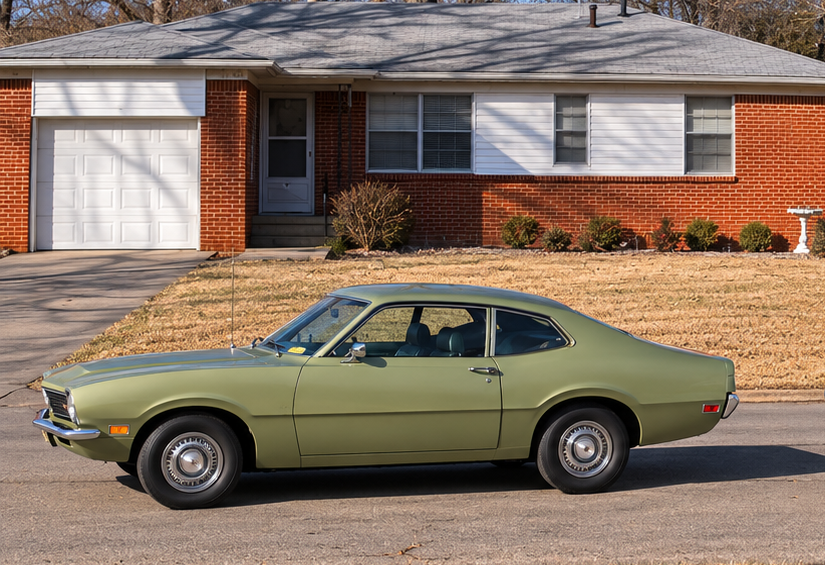
For years, I'd pull into the driveway and see the Maverick sitting there.
And every year, it seemed to get a little worse.
The car I'd spent nearly a decade driving was slowly rusting away, and eventually I got tired of looking at it.
Something had to change.
I'd started a new job, learned some new skills, and picked up tools and experience I didn't have years earlier.
And between the internet, AI, research, and a healthy dose of stubbornness, I figured there wasn't much I couldn't learn to do.
Did I know everything this car needed?
Absolutely not.
But I could figure it out.
And that's half the fun.
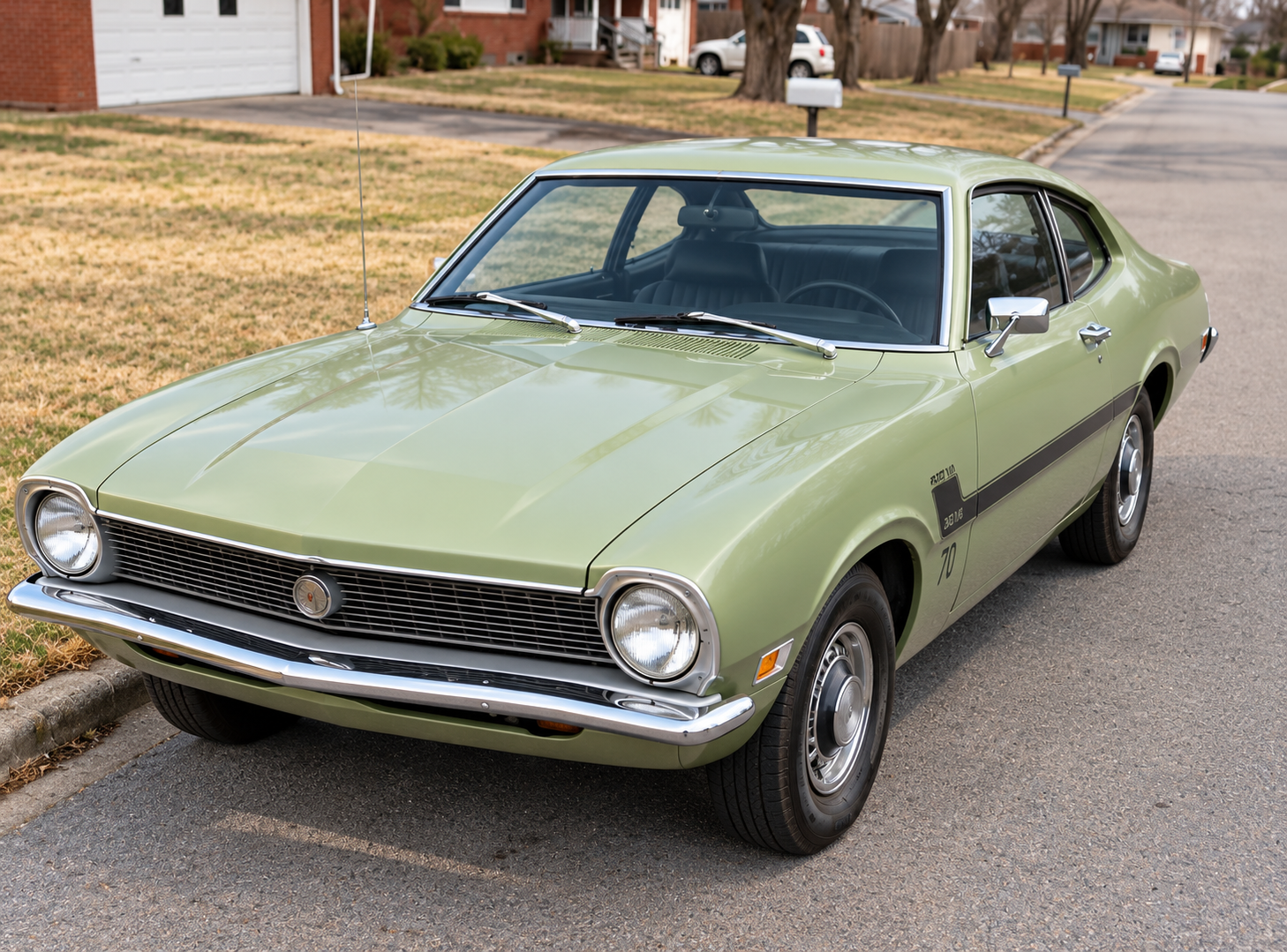
There's another reason this project means so much to me.
My son loves tools. He loves working with his hands and figuring out how things work.
And my dad? He's the real gearhead in the family.
Dad is the guy who can look at a car and start talking about engine swaps, transmissions, rear-end modifications, and wheel combinations.
I'm the guy who researches the parts, figures out how to make things fit, turns the wrenches, and fabricates whatever we can't find.
And every once in a while, I even come up with a good idea.
Dad is my sounding board. His mechanical experience gives me someone to bounce ideas off, especially when I'm working through something unfamiliar.
We approach things from different angles, but there's a lot to learn from that.
And now my son gets to be part of it, too.
This is my build, my vision, and my collection of sometimes questionable ideas. But having my dad's experience and my son's enthusiasm alongside me makes it something more.
Three generations learning, experimenting, turning wrenches, and getting our hands dirty.
Twenty years ago, my aunt gave me a car.
Today, that car is giving us something to build together.
02 Body & fabrication
One thing I've learned in network engineering is that you can build the most sophisticated system imaginable, but if the foundation underneath it is bad, you're going to have problems.
Cars aren't much different.
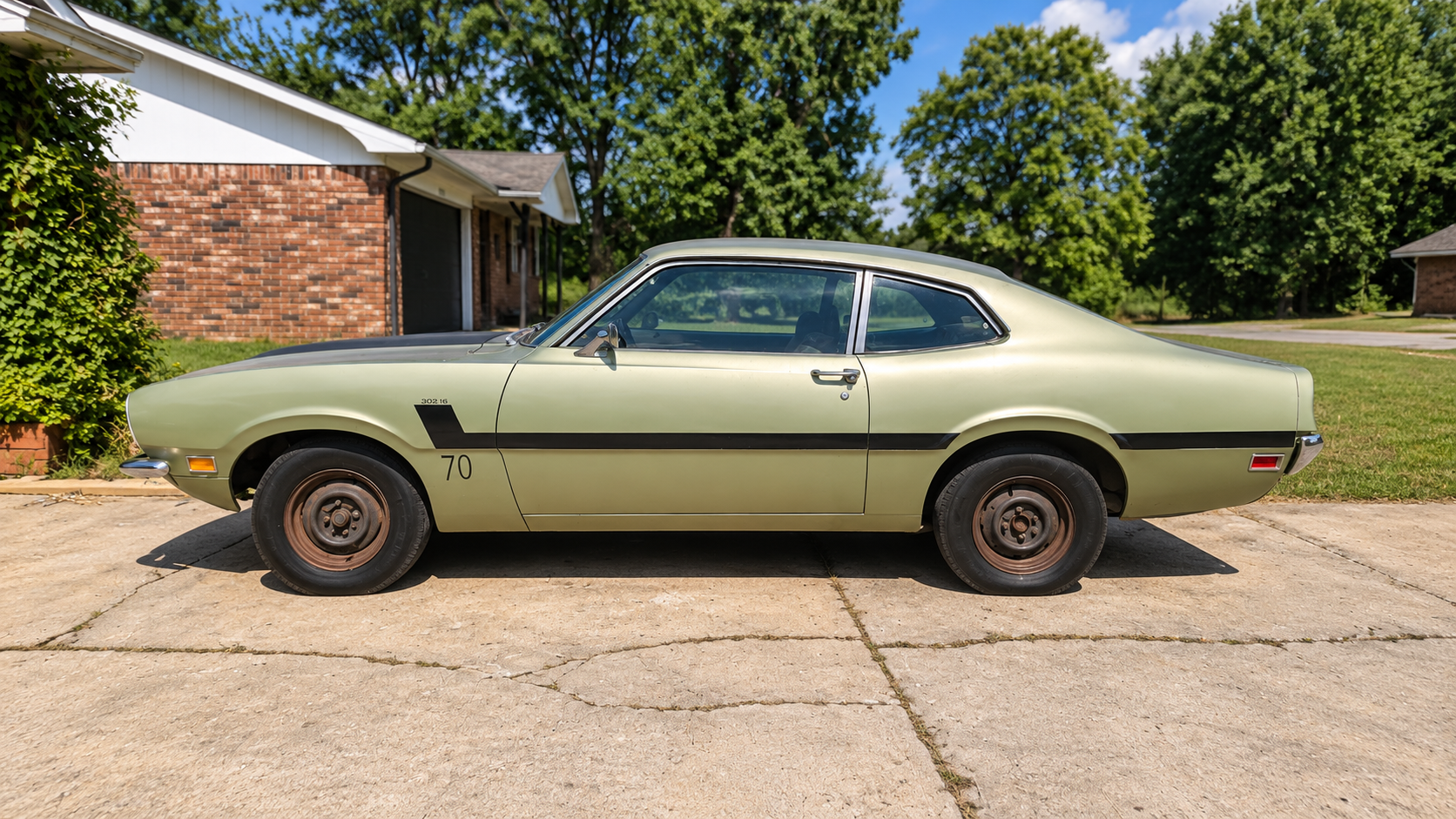
After sitting for years, the Maverick needed attention.
Rust, aging components, deteriorated materials, and the general consequences of spending too much time outdoors had taken their toll.
Before getting carried away with the fun modifications, I had to address the fundamentals.
That meant dealing with damaged floor sections, fabricating replacement metal, and making sure the structure was sound enough for the work ahead.
This is where I started learning that having the right tools and knowing how to use them are two entirely different things.
There's something satisfying about taking a piece of sheet metal, measuring it, cutting it, shaping it, and watching it become part of the car.
And there's something equally humbling about discovering that the first piece you made doesn't fit quite as well as you thought.
But that's engineering.
You measure. You test. You learn. You adjust.
Then you try again.
The foundation comes first. Everything else depends on it.
03 Inside the car
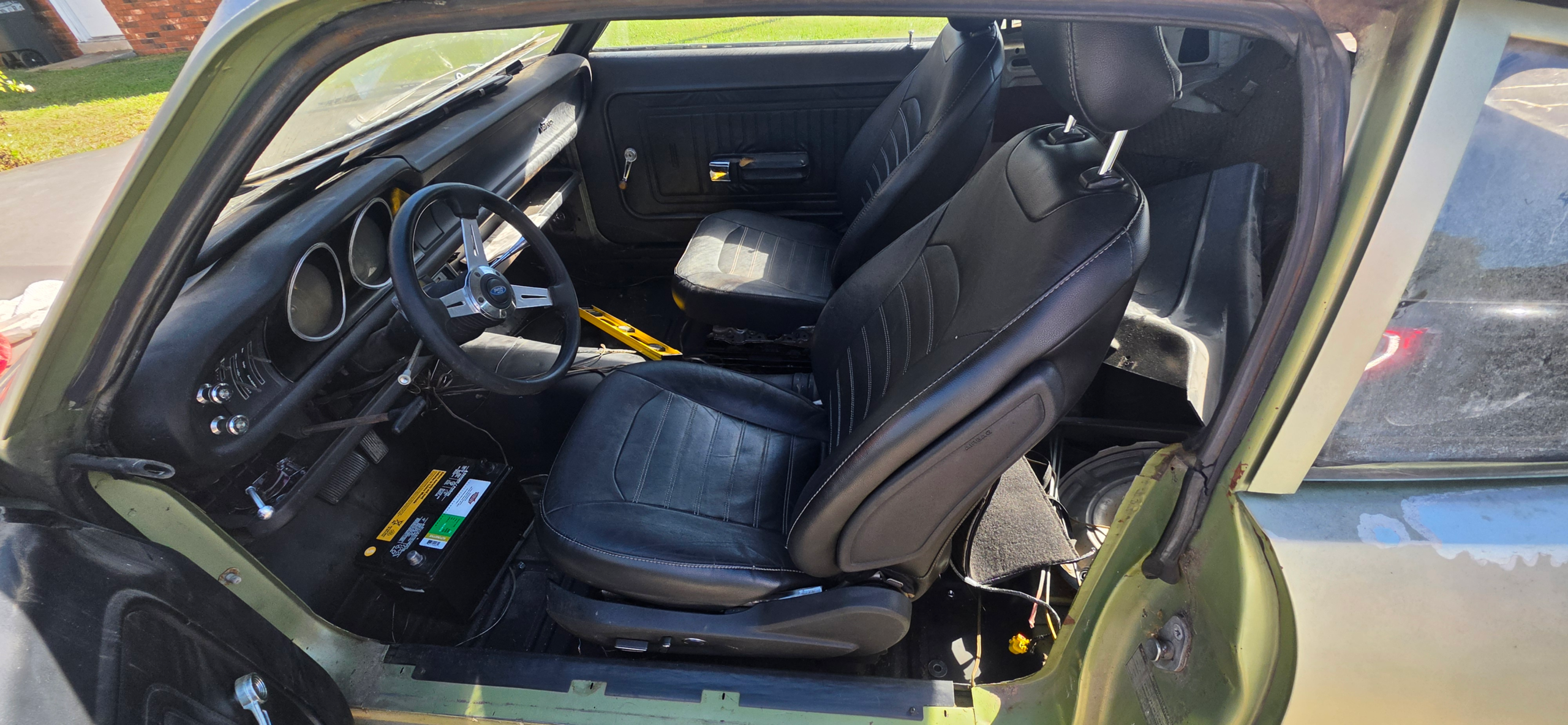
I've always loved the original bench seat in the Maverick.
It has that unmistakable classic-car appearance.
Unfortunately, I'm six feet, seven inches tall.
And the original interior wasn't exactly designed around someone my size.
I wanted something more comfortable, but I also loved the appearance of bucket seats in classic muscle cars.
Then my wife bought a Ford Fusion.
I noticed something about the seats.
They sat relatively flat on the floor.
And immediately, the gears started turning.
Could I make those fit in the Maverick?
Then I discovered the best part.
Six-way power adjustments.
And heated seats.
Now we're talking.
Of course, fitting modern power seats into a car built in 1970 isn't exactly a bolt-in operation.
There's mounting geometry to consider, structural reinforcement, clearance issues, wiring, relays, and making sure everything is securely installed.
And when you're my height, every inch of headroom matters.
But that's what makes this fun.
Instead of accepting that the car is uncomfortable because it's old, I can ask a different question:
What would it take to make it comfortable without losing its character?
That's the kind of problem I enjoy solving.
04 Under the hood
The Maverick is powered by a 200-cubic-inch inline-six engine.
It's simple, mechanical, and refreshingly straightforward.
No factory engine computer. No modern electronic fuel injection system. No maze of computer-controlled modules required to keep it running.
And I like that.
Over the years, we've made improvements, including the earlier engine overhaul and RV camshaft.
More recently, we've upgraded from the original single-barrel carburetor to a two-barrel setup.
We've also replaced the mechanical fuel pump with an electric system, installed a replacement fuel tank, updated the fuel lines, and addressed deteriorated components from the old fuel system.
The ignition system received an upgrade with an HEI distributor as well.
These aren't changes made simply because newer parts exist.
Each modification has a purpose.
Sometimes it's reliability. Sometimes it's serviceability. Sometimes it's performance.
And sometimes it's because I looked at something and thought, "Surely there's a better way to do this."
But there's one principle I want to preserve.
The engine should remain mechanically independent of the technology I'm adding.
I don't want a Raspberry Pi deciding whether my classic car gets to start.
The car should be able to run without the monitoring system.
Which brings us to my favorite part of this entire project.
05 The build today
In my professional life, I work with networks, infrastructure, and technology.
And one of the most important things we do is monitor systems.
We collect data. We watch performance. We look for patterns. We troubleshoot problems.
Because there's a big difference between knowing something works and understanding how well it's working.
Now consider a classic car.
You get a handful of gauges, some warning indicators, and whatever you can figure out by listening to the engine.
I'm a big fan of the ID10T error light. I've even got one in my office.
But that's not much of a diagnostic report.
I wanted more information.
Not because I wanted to replace the original mechanical systems, but because I wanted to understand them.
What's the engine vacuum doing?
How does coolant temperature change under different conditions?
What's happening with throttle position?
Is the carburetor running rich or lean?
How do those readings relate to one another?
And could I collect that information over time instead of only seeing what's happening at one particular moment?
So I started designing a separate monitoring network for the Maverick.
The architecture uses ESP32 microcontrollers to collect sensor information and a Raspberry Pi to receive, store, and present that data.
The sensors include engine vacuum, coolant temperature, ambient temperature, and throttle position.
For air-fuel monitoring, we're incorporating an AEM X-Series Inline Wideband UEGO Controller (30-0310), paired with a Bosch LSU 4.9 oxygen sensor.
That gives us a much better way to evaluate how the upgraded two-barrel carburetor is performing.
But individual readings are only part of the story.
What interests me is how the data relates.
Imagine being able to compare engine speed, vacuum, throttle position, vehicle speed, and air-fuel ratio on the same timeline.
Instead of guessing what happened, we can start looking at the evidence.
It's the same concept I use when troubleshooting a network.
A single reading tells you what's happening now.
Historical data helps you understand what happened, when it happened, and what else was happening at the same time.
Here's the important part.
The monitoring network isn't there to run the car.
It's there to observe it.
The original mechanical systems remain responsible for operating the vehicle.
The electronics collect information, display it, and help me make better decisions.
If the Raspberry Pi goes offline, the Maverick should still run.
If the tablet stops working, the engine doesn't care.
If the wireless monitoring network disappears, the original mechanical systems continue doing their jobs.
That's intentional.
I want to preserve the simplicity and independence of the original engineering while benefiting from the visibility modern technology provides.
And I want the architecture to be understandable enough that other people can adapt the same concepts to their own projects.
Because this shouldn't have to be something that only works in my garage.
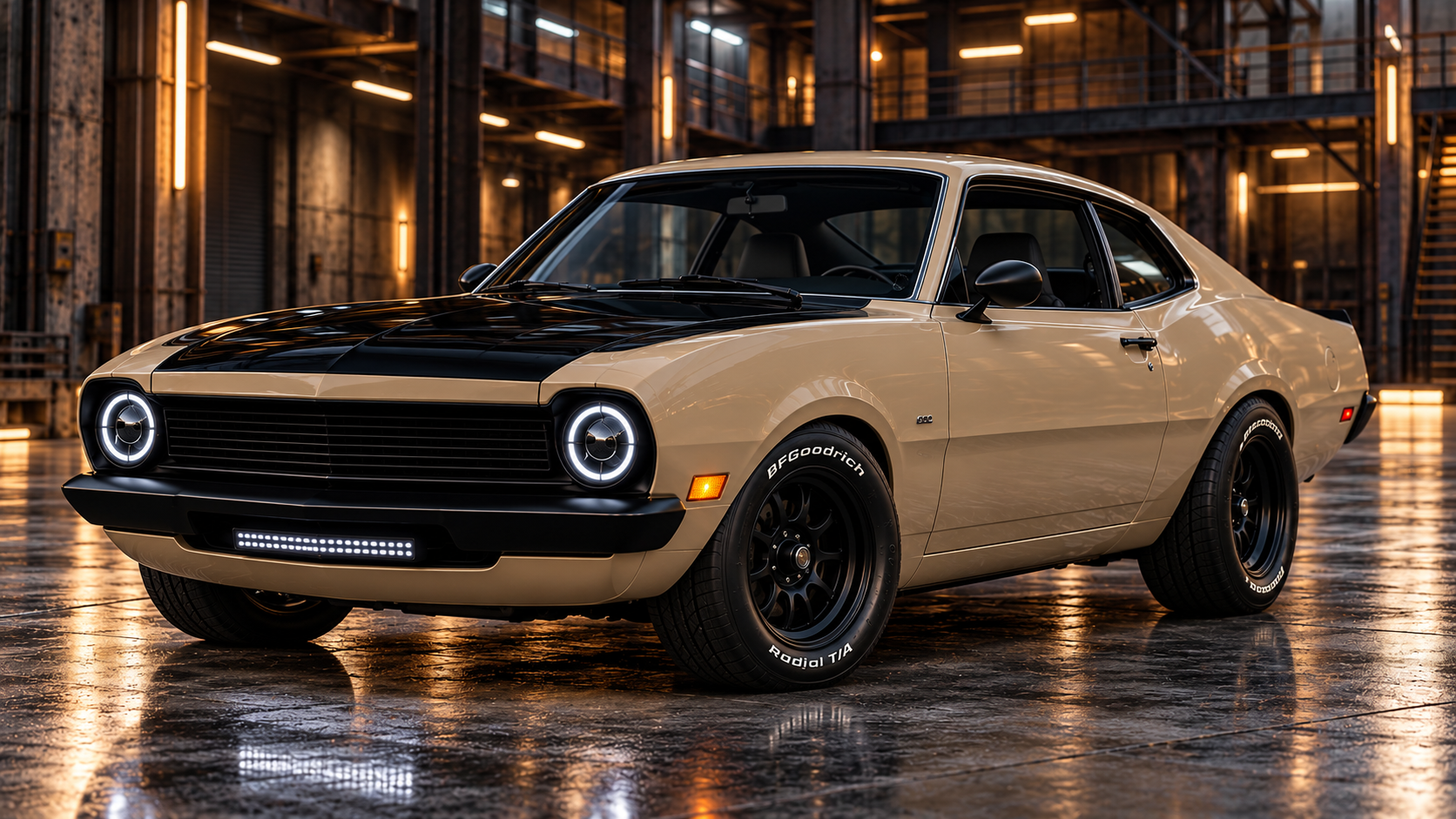
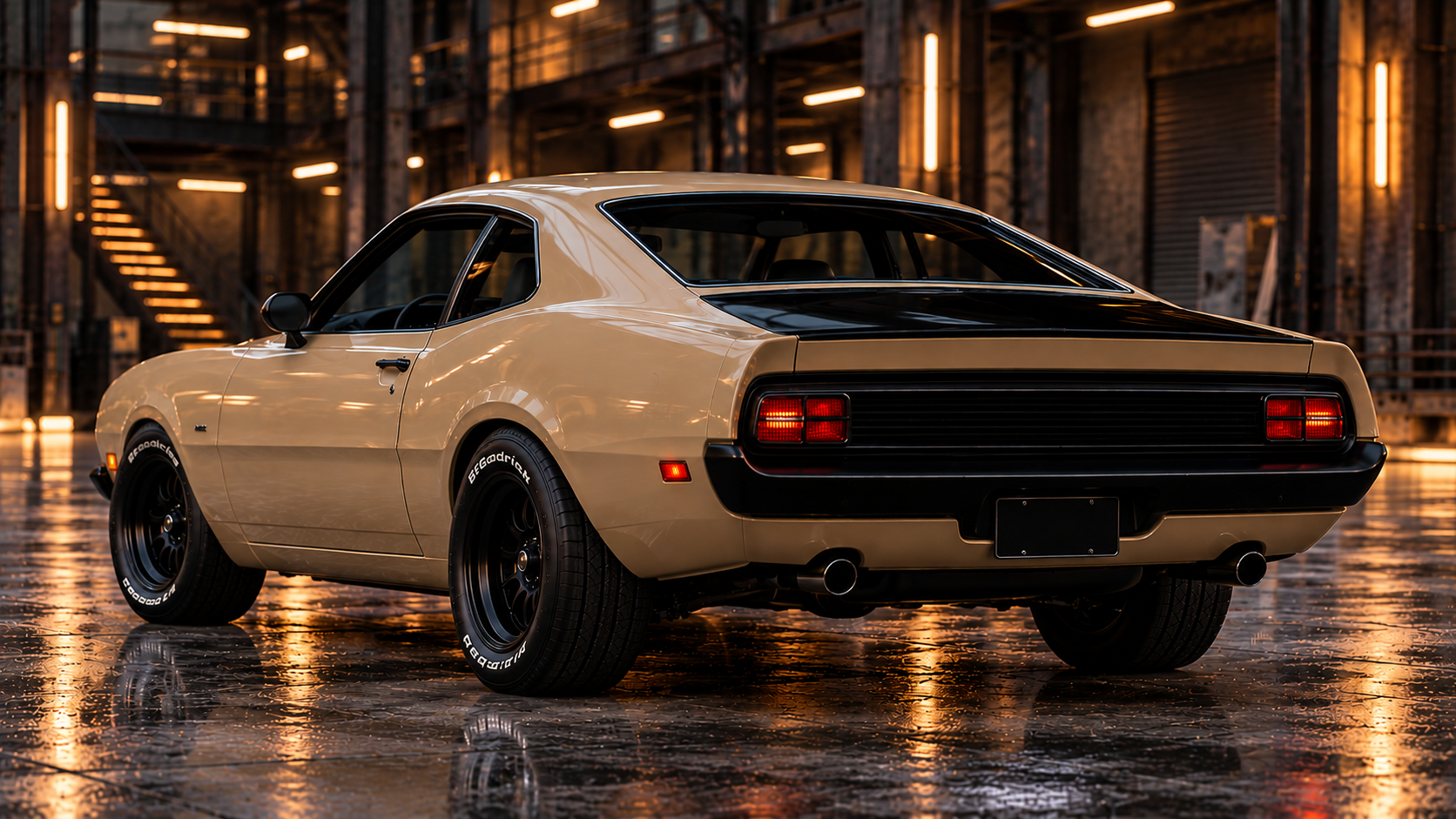
Ford didn't produce a factory 1970 Maverick X trim package.
The X is mine.
And it represents something specific.
X is the build identifier. It's undefined because this project is always evolving.
One day we're working on a custom grille.
The next we're adding sensors, upgrading headlights, designing LED taillights, or relocating the front turn signals into the headlight halos.
There isn't some final blueprint that says this is exactly what the Maverick must become.
The build changes as I learn, experiment, and discover new possibilities.
Sometimes a new idea solves a problem.
Sometimes it's simply something I think would be cool.
And sometimes I discover that the first idea wasn't nearly as good as I thought.
That's okay.
The X represents the freedom to create, experiment, and improve without being limited to somebody else's idea of what this car should be.
I recently learned about Samuel A. Maverick, a Texas landowner whose unbranded cattle helped give rise to the word maverick.
Over time, the word came to describe someone who thinks and acts independently.
And I love that.
Someone who doesn't have to follow the herd.
I've always enjoyed questioning things.
Why?
What?
Who?
How?
Why are we doing it this way?
What problem are we actually trying to solve?
Who decided this was the only acceptable solution?
And how could we do it better?
That doesn't mean ignoring proven practices or throwing out good engineering.
Quite the opposite.
Respect the foundation. Question the method.
I believe there are fundamental principles that make systems work.
Whether we're talking about networking, mechanical engineering, electrical systems, or software, those principles matter.
But once you understand them, why should there be only one acceptable way to accomplish the goal?
If I can build something that's safe, reliable, efficient, and easier to maintain, why shouldn't I explore it?
Show me the requirement.
Show me the underlying principle.
Then give me the freedom to solve the problem.
That's how I approach engineering.
And that's how I'm building Maverick X.
I don't know everything about automotive engineering.
I'm not going to pretend I do.
But I know how to research, troubleshoot, fabricate, and learn.
And I have people around me who bring knowledge and experience I don't have.
Between my dad's mechanical expertise, my own background in networking and technology, and my son's enthusiasm for working with his hands, there's a lot of opportunity to learn something new.
That's part of why I'm documenting this project.
I want to share what works, what doesn't, and what I learn along the way.
The parts we use.
The design decisions we make.
The problems we run into.
The things we have to fabricate.
The engineering behind the electronics and software.
And yes, probably a few mistakes.
Because sometimes seeing how someone solved a problem is more valuable than simply seeing the finished result.
If someone reads this and decides to restore an old car, learn to weld, build their first sensor network, experiment with a Raspberry Pi, or question a design they've always accepted, then sharing this project will have been worth it.
Twenty years ago, my aunt gave me a 1970 Ford Maverick.
I drove it for years, parked it when life changed, and eventually watched it slowly deteriorate in the driveway.
Now I'm bringing it back.
Not as a museum piece.
Not as a perfectly original restoration.
And not as some futuristic computer-controlled machine pretending to be a classic car.
I'm building something that reflects who I am.
A little old-school mechanical engineering.
A little modern technology.
A lot of research, fabrication, and experimentation.
And three generations making memories along the way.
Will every idea work?
Probably not.
Will I change my mind halfway through something?
Almost certainly.
Will there always be something else I want to improve?
Absolutely.
That's why it's Maverick X.
The X is undefined because the possibilities aren't.
And when somebody tells me, "That's not how it's supposed to be done," my response is pretty simple.
Just watch me.
Welcome to Maverick X. The build is never really finished.
Maverick / The project notebook
The individual builds, the wiring, the code, and the reasons behind the choices.

October 21, 2026
A 1970 Ford Maverick, three generations of family history, and a network engineer who decided a classic car needed its own digital nervous system.…
Read the article
October 21, 2026
A 1970 Ford Maverick doesn't have an onboard computer, so we're building one. Inside the Maverick X software: Pi-hosted dashboards, ESP32 device approvals, live…
Read the article
October 20, 2026
Three working sensors were only the beginning. We're planning throttle position, wideband air/fuel ratio, RPM, cabin temperature, and a custom modular PCB for Maverick…
Read the article
October 20, 2026
What happens when a network engineer decides his 1970 Ford Maverick needs a digital nervous system? Raspberry Pis, ESP32 microcontrollers, wireless sensors, and a…
Read the article
October 18, 2026
How a $96.14 junkyard seat purchase turned a classic Maverick comfort problem into a much bigger project.
Read the article
October 18, 2026
The electrical detective work and relay system behind the 2015 Fusion power-seat conversion.
Read the article